BUSENFREUND*INNEN // BOSOM BUDDIES:
PRIDE MONTH SPECIAL PART III.
Pride ist nicht nur ein Monat – Pride ist ein Lebensgefühl // Pride is not just a month, it’s a way of life
Die Bedeutung von Pride im LGBTQIA+-Kontext // The meaning of Pride in the LGBTQIA+ context
Alltagssituationen für LGBTQIA+-Menschen // Every day life for LGBTQIA+ people
Auch auf der Arbeit ist es für queere Menschen nicht immer einfach. Zunächst stellt mensch sich häufig die Frage: Muss, möchte, soll oder kann ich mich auf der Arbeit outen? Je nach Arbeitsumfeld fällt hier die Entscheidung anders aus und ist einfacher bzw. schwerer. Outet man sich einmal auf der Arbeit, muss mensch sich häufig mehrfach outen. Bei neuen Kolleg*innen, bei verschiedenen Abteilungen etc. Eine harmlose Frage nach dem Wochenende, ein privates Telefonat in der Pause oder eine Nachricht auf dem Sperrbildschirm sind für LGBTQIA+-Personen im Arbeitskontext eine Herausforderung, wenn es um das Thema Outing geht.
Work environments can also be difficult for queer people. You often have to ask yourself: do I need, want, should or have to out myself in front of my colleagues? Depending on the job and office atmosphere the decision can be easy or difficult. If you out yourself at work once, you probably have to do it over and over. With new colleagues, in a new department and so on. A simple question about your weekend, a private phone call during break time, or a message from your partner on your home screen can be challenging in a work context, if your are part of the LGBTQIA+ community, when it comes to outing yourself or being outed.
Warum Sichtbarkeit das ganze Jahr wichtig ist – Wir sind hier! // Why visibility is important year round – we are here!
Unabhängig vom Engagement an sich, bleibt besonders der Schutz und die Sicherung der Rechte von queeren Menschen eine dauerhafte Notwendigkeit. Denn in den letzten Jahren sind die Zahlen von queerfeindlichen Übergriffen alarmierend gestiegen und der mangelnde rechtliche Schutz – insbesondere durch das Grundgesetz – verschärft die Situation. Fortschritte, die bereits auf rechtlicher Ebene (Ehe für alle, Selbstbestimmungsgesetz) gemacht wurden, können genauso schnell wieder zurückgenommen werden – wie mensch gerade an der Situation in den USA sieht.
Pride darf nicht nur ein Event im Jahr sein – es ist ein dauerhafter Kampf für Gleichberechtigung, Sicherheit und Gerechtigkeit.
Regardless of the engagement, protecting the rights or queer people is a constant necessity. Because the numbers of anti-queer hate crimes have being increasing in recent years and the lack of legal protection – for example by the constitution – only makes the situation worse. Progress in the legal realm (like marriage equality, or the self determination laws) can be undone very fast, as we are witnessing in the US right now.
Pride should never just be one event a year – it’s a constant fight for equality, visibility and justice.
Pride im Alltag leben – Wie kann das aussehen? // Pride in everyday life – what can it look like?
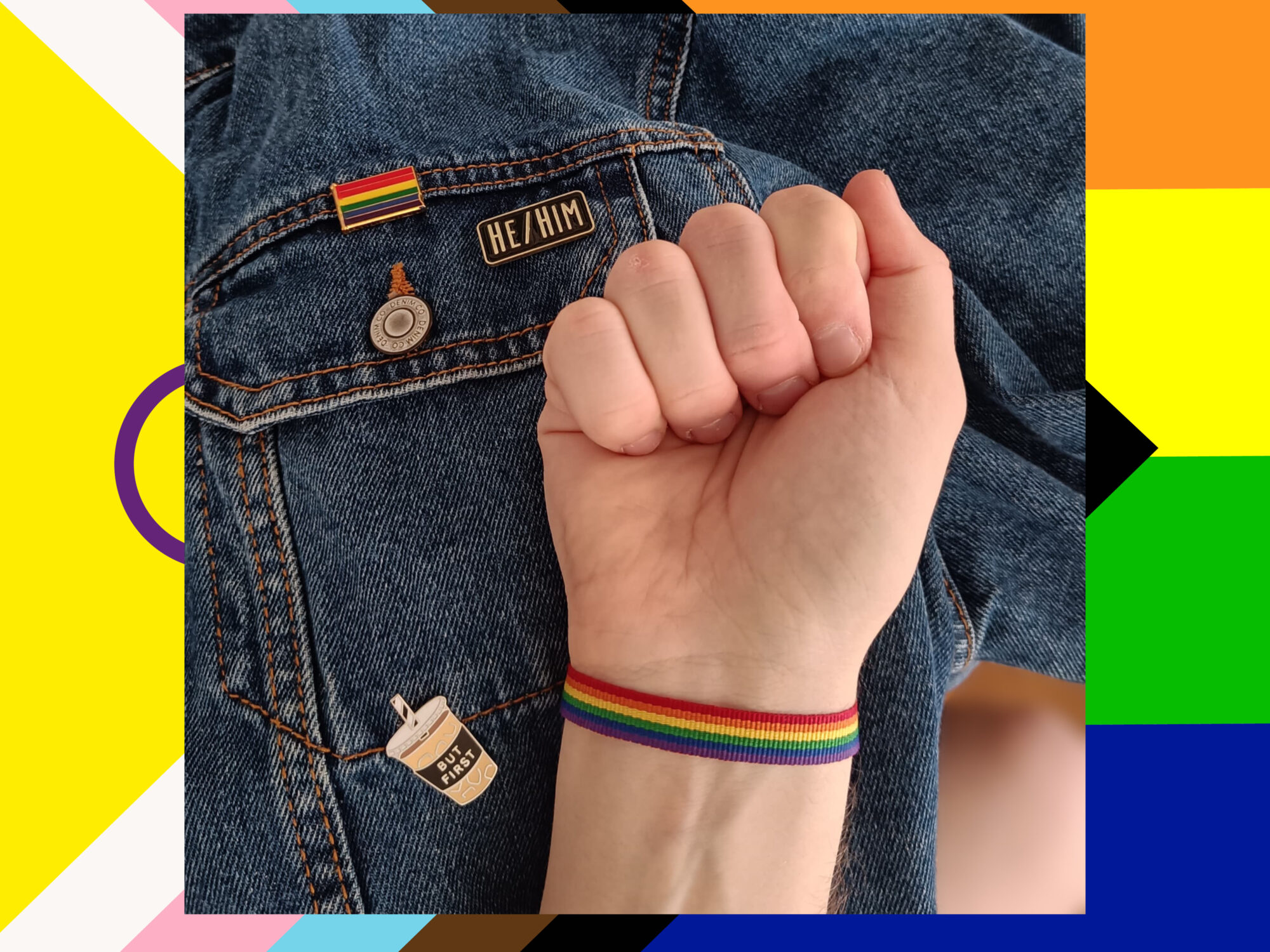
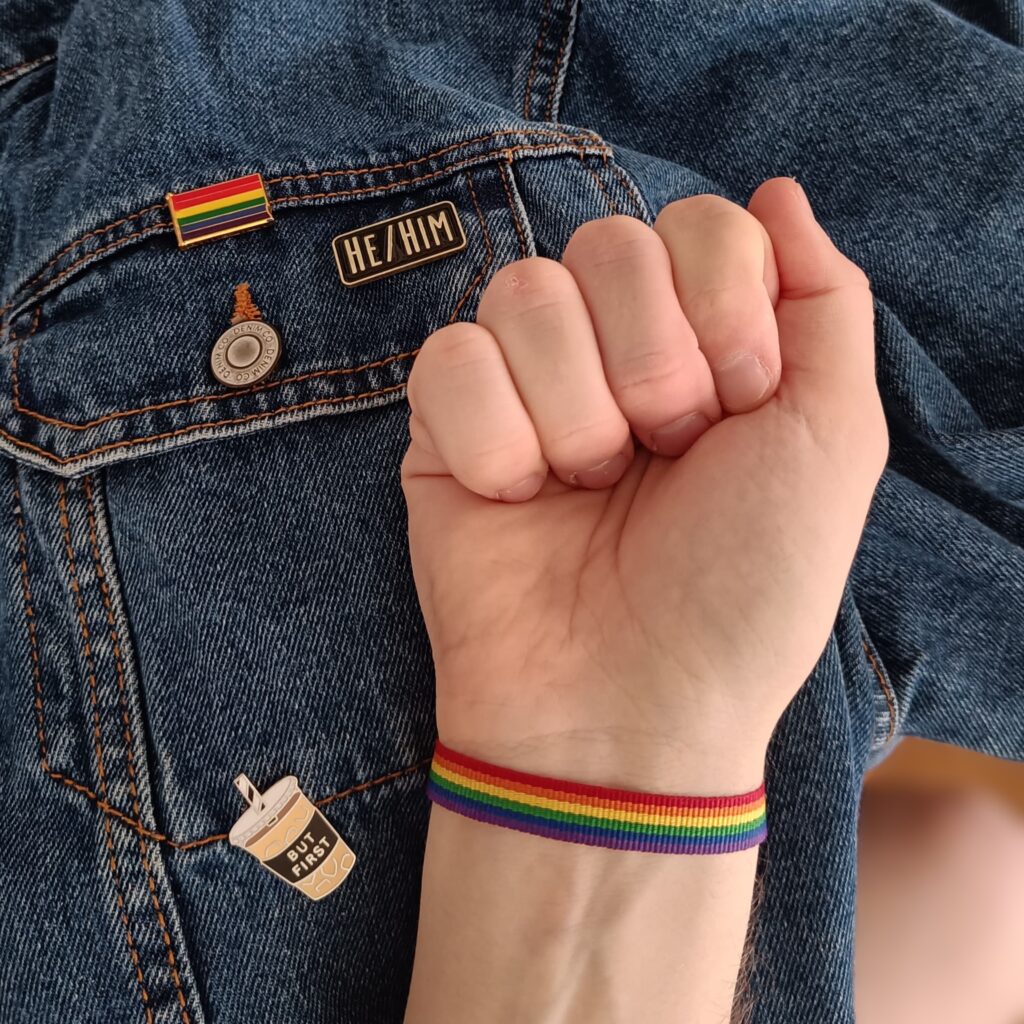
Für mich bedeutet Pride im Alltag, zu sich selbst stehen, authentisch zu bleiben und sichtbar zu sein. Das kann z.B. dadurch geschehen, dass mensch offen von sein/-er Partner*in spricht, dem Zeigen von Zuneigung in der Öffentlichkeit, dem Tragen von Pride-Pins oder Ähnlichem und der Repräsentation auf Social Media. Außerdem kann Pride im Alltag auch Engagement für die Community bedeuten. Sei es bei bzw. durch politische Aktionen oder dem Besuch von queeren Veranstaltungen.
Wie kann Pride im Alltag für andere aussehen? Dazu habe ich eine kleine, nicht repräsentative Umfrage gestartet. Aus den Antworten dieser geht hervor, dass Pride im Alltag für jeden individuell anders aussehen kann. Z.B. Sichtbarkeit durch das Tragen von Symbolen oder durch das offene Kommunizieren der Zugehörigkeit zur LGBTQIA+-Community im Berufskontext. Dazu gehört auch, dass mensch sich nicht mit Pride im Alltag auseinandersetzt oder dies zumindest nicht bewusst macht. Aus den verschiedenen Aussagen, auf ihre Grundkategorien heruntergebrochen, lassen sich folgende Grundbestandteile ableiten: Aktivismus & Engagement, Offenheit & Authentizität und Sichtbarkeit & kontinuierliche Präsenz. Dabei kann die Sichtbarkeit sowohl im visuellen oder auch im übertragenen Sinne stattfinden.
An folgendem Zitat lassen sich die verschiedenen Kategorien und auch der Kern von Pride im Alltag darstellen: “Pride im Alltag bedeutet für mich, das öffentliche Zeigen/Präsentieren von Pride-Symbolen (Armbänder, Pins, Taschen usw.) unabhängig vom Pride Month. Außerdem bedeutet es inklusive Sprache und Zusammenhalt gegen Intoleranz.”
Sichtbarkeit wird hier durch das Zeigen von Pride-Symbolen benannt. Daran und an der Verwendung von inklusiver Sprache lässt sich Offenheit und Authentizität festmachen. Die kontinuierliche Präsenz kann man an der Unabhängigkeit vom Pridemonth erkennen. Die letzte Kategorie Aktivismus & Engagement lässt sich am Zusammenhalt gegen Intoleranz belegen.
To me personally, it means to stay true to yourself, being authentic and visible. For example, openly talking about one’s partner, showing affection in public, wearing pride pins or something similar every day, and representation on social media. It can also mean getting involved in your local queer community, maybe through political activism, or by visiting queer events.
What does every day life pride look like for others? To get a better picture, I did a little survey (not representative). The answers I got give insights and show that truly living pride looks different for everybody. Being visible through wearing pride symbols, or by openly communicating that you are part of the LGBTQIA+ community in different contexts. To confront yourself with pride, its history and current relevance, not just in June but throughout the year, is something most of us don’t really do, at least not on a conscious level. Different categories or aspects of living pride seemed to come up most in the survey: activism & commitment, openness & authenticity, and visibility & continued presence. Visibility was mentioned in the literal and figurative sense. I think the following quote, taken from one person’s answer to the survey, shows the afore mentioned categories and sums up the importance pride in our every day lives: „Pride in every day life means wearing pride symbols all year round. But also other things, like using inclusive language, or supporting each other and being visible when faced with hate or intolerance.“
Visibility in this quote, is shown by wearing the symbols of pride, like rainbow flags or pronouns pins. Through this, and the use of inclusive language, we can see openness and authenticity. Wearing the symbols every day, shows the importance of visibility and continued presence. The category activism and commitment is represented by the reference to supporting each other in the face of ignorance.
Fazit – Kleine Schritte, große Wirkung // Conclusion – small steps, big impact
Auch wenn nach Juni die Regenbogenflaggen wieder aus der Öffentlichkeit verschwinden, die Community bleibt sichtbar, stolz und stark. Dabei spielen auch Allies eine wichtige Rolle – sie tragen auch zum Zusammenhalt und zur Sichtbarkeit bei. Letztendlich bleibt die klare Botschaft: Zeig dich, wie du bist – laut oder leise, bunt oder schlicht – Hauptsache authentisch und mit offenem Herzen.
Denn Pride bedeutet nicht nur zu feiern – es bedeutet, zu erinnern, sichtbar zu machen und zu kämpfen. Es erinnert uns daran, dass Akzeptanz und Offenheit keine Frage eines Monats sind, sondern Haltung, die ganzjährig gelebt werden muss. Gerade angesichts zunehmender queerfeindlicher Übergriffe und politischer Rückschritte ist der Einsatz für queere Rechte dauerhaft notwendig.
Ihr wollt euch für Pride im Alltag stark machen und wisst aber noch nicht genau wie?
In diesem Artikel (erschienen auf refinery29.com, verfasst von: Helen Woltering & Lisa Trautmann) findet Ihr 10 Schritte für mehr Toleranz im Alltag.
//J.
Even when the rainbow flags are coming down again once June ends, the community stays visible, proud and strong. Allies are important here too, they help feel connected, supported and seen. In the end, the most important take away is that you should show and present yourself just the way you are. Be it loud or quiet, colourful or not, you should always stay true to yourself, be authentic and lead with an open heart.
Because Pride is not just about celebrating – it means remembering, it means making visible, it means fighting. It should remind us that acceptance and openness is not an issue of one month a year, but an attitude that needs to be lived every day. Especially now that we are facing so much hate and political and personal backlash, it’s more important than ever to fight for queer rights.
If you want to get involved and find ways to be proud in your every day life, I recommend this article, which lists ten ways to integrate pride and practice tolerance in your every day life.
//J.
QUELLEN // SOURCES
Deutsches Institut für Sozialwirtschaft e.V. (Hg.) (2021): Woher kommt eigentlich der „Pride Month“? Online verfügbar unter https://echte-vielfalt.de/lebensbereiche/lsbtiq/woher-kommt-eigentlich-der-pride-month/#:~:text=Jeden%20Juni%20ist%20Pride%20Month,dabei%20um%20Sichtbarkeit%20und%20Gemeinschaft., zuletzt geprüft am 16.05.2025.
Cambridge University Press & Assessment (Hg.): Gay Pride in the Cambridge Dictionry. Online verfügbar unter
https://dictionary.cambridge.org/de/worterbuch/englisch/gay-pride, zuletzt geprüft am 16.05.2025.
Wenk, Kari: Nachgedacht über: Pride Month und Pinkwashing. Hg. v. Athenaeum Staade. Online verfügbar unter https://athenaeum-stade.de/nachgedacht-ueber-pride-month-und-pinkwashing/#:~:text=Im%20Pride%20Month%20wird%20%C3%BCberall%20daran%20erinnert%2C,und%20Anl%C3%A4ssen%20ist%2C%20die%20vielleicht%20an%20einem, zuletzt geprüft am 16.05.2025.
Lotter, Lea (2022): Pride Month ist vorbei und unser Kampf geht weiter! Hg. v. Klasse gegen Klasse. Online verfügbar unter https://www.klassegegenklasse.org/pride-month-ist-vorbei-und-unser-kampf-geht-weiter/, zuletzt geprüft am 16.052025.
Alter: 29
Körbchengröße: zero
Sternzeichen: Jungfrau
Aktuelles Lieblingslied: Bad Bunnies – Zsá Zsá, What was that? – LordeWenn ich ein Tier wäre, dann wäre ich: ein Eichhörnchen
Drei Sachen die ich nicht mag: toxische Männlichkeit, zu warm & zu kalt, Engstirnigkeit.
Age: 29
Cup size: zero
Zodiac sign: Virgo
Current favourite tune: Bad Bunnies – Zsá Zsá; What was that? – Lorde
If I were an animal, I would be: a squirrel
Three things I do not like: toxic masculinity, when it’s either too warm or too cold, close mindedness.